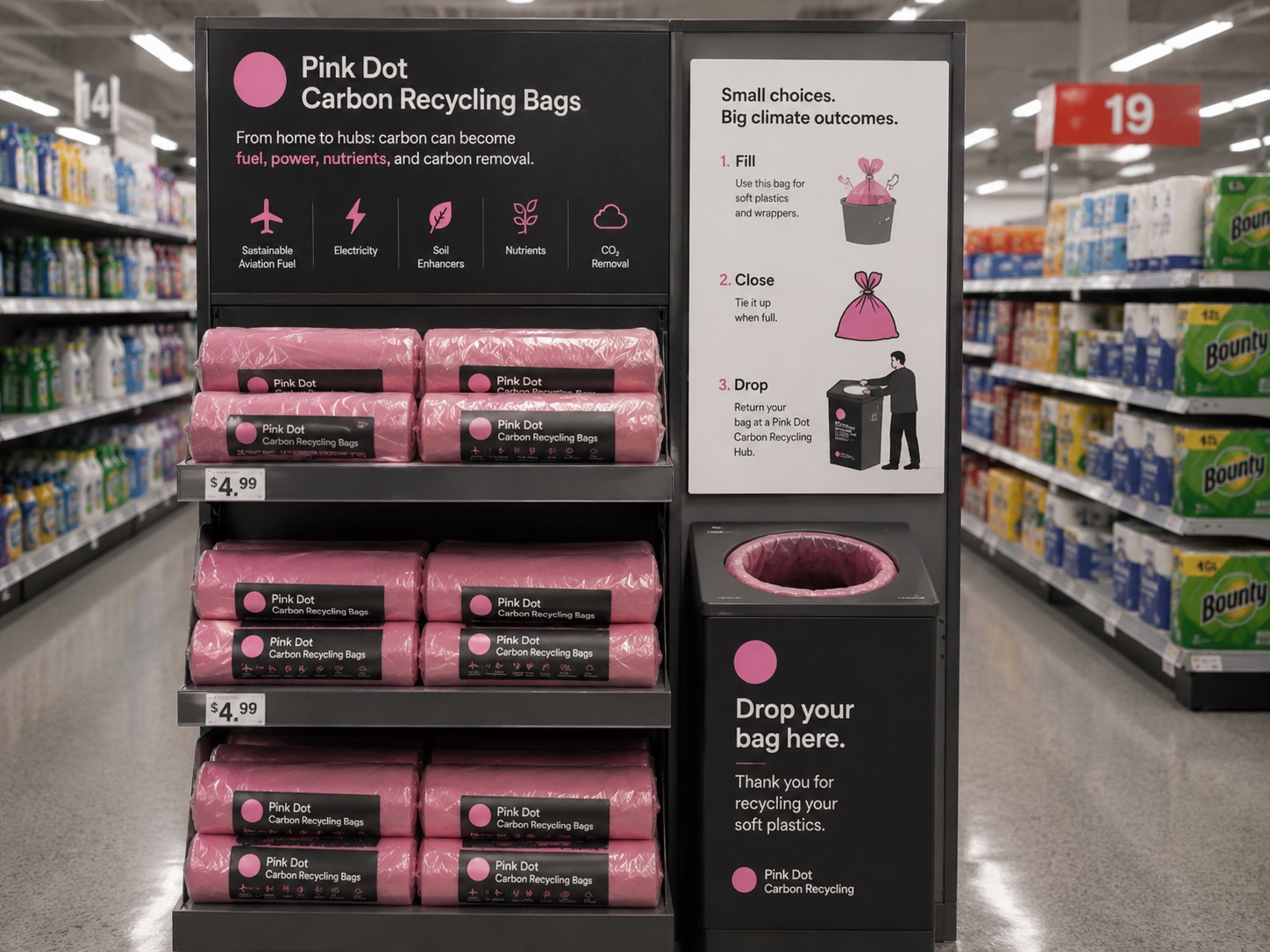
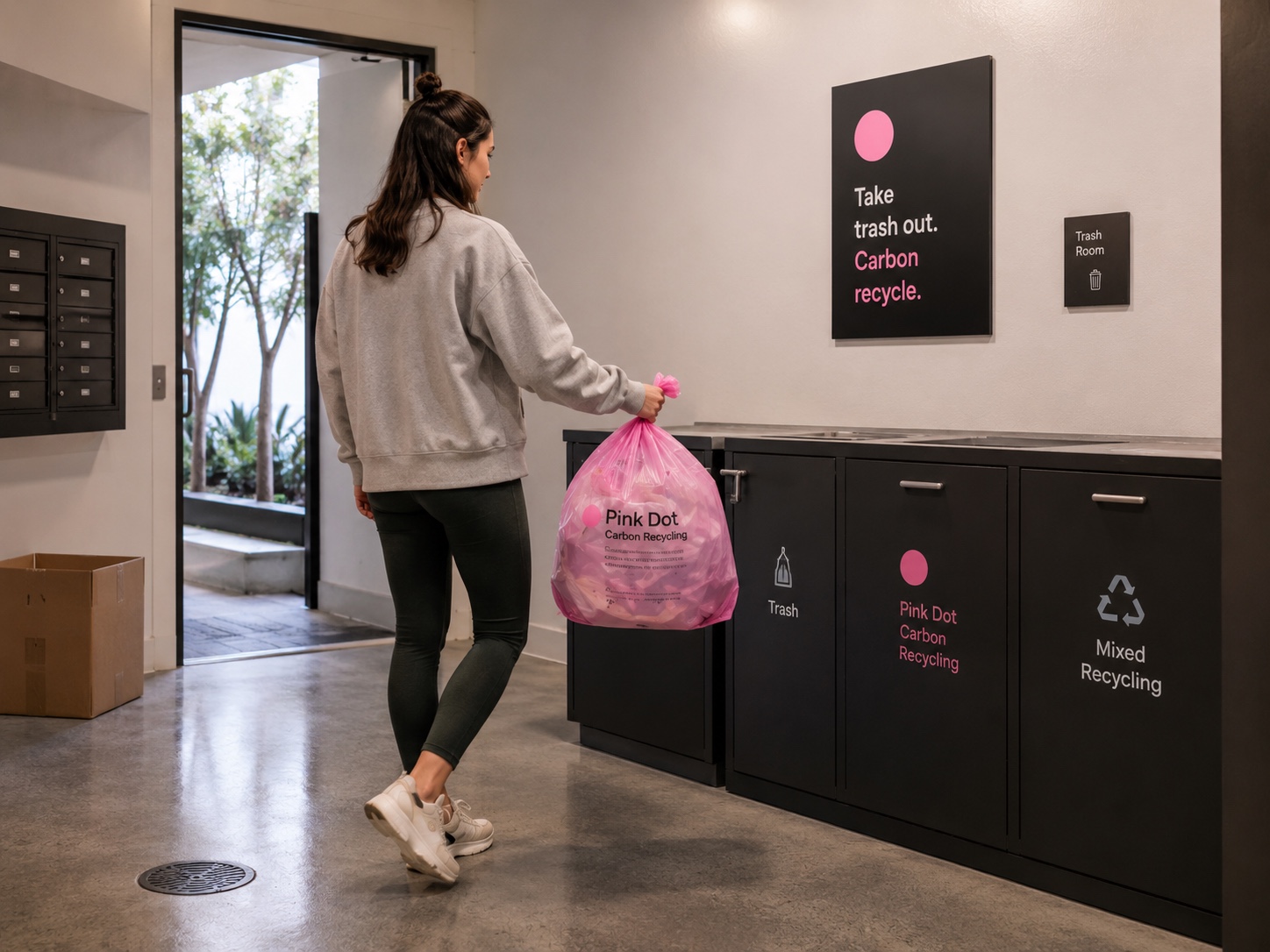
A public-facing symbol
The mark helps people quickly identify approved carbon recovery actions.
Pink Dot is a sorting and routing instruction. It simplifies public behavior while supporting more advanced downstream recovery logic.
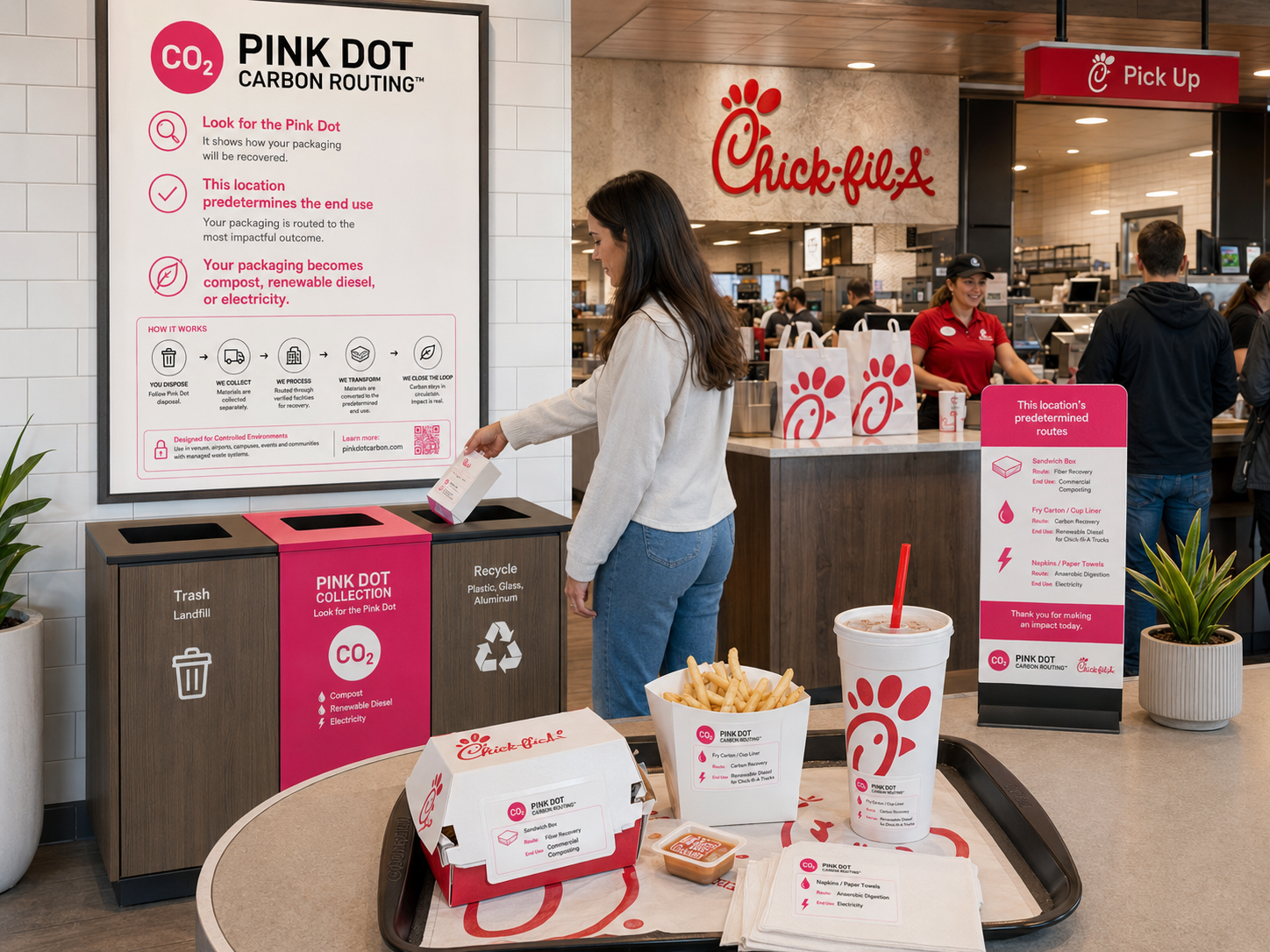
The mark helps people quickly identify approved carbon recovery actions.
It links product instruction, bag, bin, collection, routing, and end-market handling.
The mark can appear on packaging, bags, decals, station headers, and site signage.
The same visual language can work across retail, residential, airports, campuses, and controlled venues.
Composting is one possible destination. Pink Dot is the front-end coordination signal.
It does not make decomposition or environmental performance claims about a material.
Blue recycling still handles clean recyclables. Pink Dot identifies a separate carbon recovery stream.
End-market outcomes depend on local rules, processor capability, and approved site specifications.
Focuses on aerobic breakdown into compost and soil-related outputs.
Routes approved food scraps, food-contact materials, and carbon-rich residuals into the right recovery stream.
Usually make a material claim about compostability under certain conditions.
Make a participation and sorting claim: this belongs in the Pink Dot stream if locally approved.
The same system can be visible in retail, residential, and aviation contexts while serving very different operating models.